Showing posts with label living with PH. Show all posts

Saturday, November 8, 2014

PH Plus Awareness: Samantha-Anne's Story


This is a long post. If just one person reads this, though, and it helps them to not have to wait 3 years to be diagnosed with Pulmonary Hypertension, then it has been worth it.
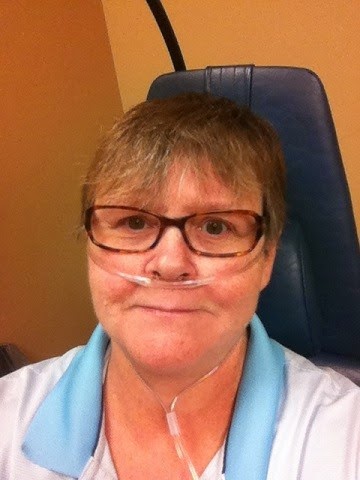
The first time I heard about Pulmonary Hypertension was on August 18th during my first appointment with the pulmonologist. It was included in a list of other things I hadn't heard of that might be causing my illness (interstitial lung disease, cardiac asthma, sarcoidosis and PH; I had heard of pulmonary embolism because that is what killed my brother in 1990 at the age of 47.) I knew that all of these things were serious, so I starting learning about them. I'm not sure why it took so long for my doctor to send me to a "lung doctor" when my main complaint for the past 2 years had been shortness of breath (SOB), but I was glad to finally be there.

PH seemed to fit with what was going on with me. However, a lot of other diagnoses had fit before and I honestly didn't want to be disappointed yet again when the doctor told me that I didn't have x,y or z and that he didn't know why my life had changed so drastically since November of 2011. After doing pulmonary function tests, an exam and having me walk in the office while my oxygen saturation level was monitored, the doctor said I would need to have a CT scan to rule out blood clots in my lungs. That honestly was not scary to me because I've been checked for that so many times due to my family history. He said that if there were no blood clots, then I would have to have a right and left heart catheterization procedure to see if I had PH. I had a left heart cath a year ago so I wasn't nervous about that, and since I had no idea what PH was, I didn't worry about it either.

My pulmonary function tests the year before showed that I have a mild restrictive process in my lungs but no obstructive process, so no COPD (which my mom died of in 2000, so I was glad that was ruled out.) I do have mild Alpha-1 Antitrypsin Deficiency, which can affect the lungs, so I knew that lung problems could happen to me. The PFTs he did on 8/18 showed that my lungs were not moving the oxygen in the air I breathe back into my blood (that's poor diffusion capacity). Mine was about 1/3 of normal. An MRI had already shown that my pulmonary artery is slightly enlarged, so I knew that something was going on and all signs were pointing to PH.

Because I really push to get things scheduled quickly and stay on top of my care, I was able to get the CT scans scheduled for 8/21, just 3 days after seeing the pulmonologist. The CT scans showed some mild lung scarring that I already knew about and thankfully no blood clots.

During these weeks I was dealing with a lot of body wide pain (unrelated to the PH) and swelling in my feet, ankles and legs. They basically were just huge stumps, from my toes to my stomach, with no delineation between the three. They hurt and the stinging in my feet was unbearable at times. I was also having to keep an eye on my kidney status because I have Stage 3 Chronic Kidney Disease. Thankfully, there are 5 stages and my disease is mild.

Let me take a second here to talk about the word "mild". I hate that word now. Everything I had going on with me was "mild". Mild means that the doctors don't do much for you and they basically wait until it's not "mild" anymore before they get serious about talking to you or treating you. At least, that was my experience. So even though "mild" is good, it sucks. My cardiologist told me that my heart issues were "mild" and didn't need to be treated and that I should see if the pulmonologist could help me figure things out. That just didn't seem right to me. I started asking myself a lot of questions and realized that I had a lot of questions for the doctors. My life had changed drastically in the past 2 1/2 years and something was causing that. There is no way I could go from being able to hike 2-4 hours at 7000-8000 feet altitude to being SOB and having a racing heart just walking room to room in my house.

I started believing that PH was the illness that was causing my problems so I made an appointment with the PH Specialist in Denver. Neither my cardiologist nor my pulmonologist told me to do that. I did it because I was tired of not knowing why my life had been turned upside down and I wasn't going to wait on them to tell me what to do to get better (since they hadn't done that anyway.)
At the beginning of September, I went back and looked at the sleep study I had done the previous November. I knew I had sleep apnea and was supposed to wear a CPAP, but it made me feel claustrophobic and like I was suffocating so I didn't wear it. I was diagnosed with obstructive sleep apnea in 2006. I got my first CPAP that same year. I had never used my CPAP consistently in all that time. When asked by my doctors if I used it, I told them how it made me feel and that I was not using it very often. No one followed up, no one did any education, no one did any counseling and no one referred me to a sleep disorders specialist. When I looked at the November sleep study (that I had requested be done,) I noticed that my oxygen level was <90% for >99% of the night with and without the CPAP. That didn't seem right to me. I thought that oxygen levels were supposed to be above 90% all the time. The pulmonologist had mentioned getting me compliant with the CPAP so I thought I should look into that. I called the center where I had the study and no one, to this day, has ever called me back. I just kind of figured that it must not be that big of a deal if no one called me back. I was very wrong about that. 

One of the most fortunate things that happened to me was getting sick around September 7th. I ended up in urgent care for bronchitis and an upper respiratory infection. They gave me oxygen and a breathing treatment and sent me home with a ton of meds. I called the pulmonologists office to let them know about my sudden illness. I spoke with Linda, the doctor's nurse, for 41 minutes on the phone. She was the first person who seemed concerned about the results of the sleep study and that I was so sick for so long without a diagnosis. She asked me to come into the office that afternoon so she could see me. She did a very thorough exam and asked a lot of questions. I left the office that day with supplemental oxygen. I could tell right away that adequate oxygen intake is a good thing. It felt so good to breathe. She took copies of my sleep study and my other paperwork to discuss with the doctor before my appointment the following week. Linda really cared, and her taking the time to evaluate me has made all of the difference in the diagnosis of my illness. Just days later, I was set up with 24/7 oxygen at home, including using it with my CPAP at night so I could get adequate oxygenation. On 9/12, when I had my PFTs done again, my diffusion capacity was 2/3 of normal. That was an improvement. My lung function wasn't as good, but I had bronchitis and the URI so that kind of made sense.

So, at 54 years of age, I was on supplemental oxygen 24/7 and taking diuretics to reduce the fluid overload in my body (hypervolemia). I was feeling older than I am. 

On 9/18, one month after first hearing about PH, I was in the cath lab getting my pulmonary artery pressure looked at. The cardiologist told me that I had PH (the pressure in my pulmonary artery was higher than it should be), that my body was overloaded with fluid and that I probably have hypoventilation syndrome (I breathe too shallow) due to being overweight. It was a bit overwhelming. The pulmonologist confirmed the diagnosis on 10/6. The PH Specialist confirmed the diagnosis on 10/7. They both told me that I needed to treat my sleep apnea, continue using oxygen 24/7 indefinitely, lose a significant amount of weight, consider moving to a lower altitude (I live at 6,700 feet) and definitely not travel to higher altitudes and keep my sodium intake to <2000mg/day and my fluid intake to <1.5L/day to combat the fluid overload. That was VERY overwhelming.

Thankfully, I was seeing a counselor to help me deal with being chronically ill even before I got the diagnosis of PH. She has been wonderful and extremely helpful. I also was dealing with the possibility of having lymphedema (causing the swelling in my legs) and had to work through the process of getting that diagnosis ruled out. I had to have a nuclear scan done where they inject the radioactive dye between your toes! Thankfully, it sounds a lot worse than it is. No lymphedema, so that's one less thing to worry about.

I have had a lot of questions for all of my doctors since being diagnosed with PH. There are 5 different groups of PH. It looks like I am in groups 2 (PH due to heart issues) & 3 (PH due to lung issues, which are sleep apnea and hypoventilation syndrome). Group 1 is the only type of PH that has specific medications to treat it. It is also the most rare and dangerous type of PH. Every single patient's experience with PH is different than every other patient's experience with PH. There are similarities, but everyone has something unique to their illness. That makes it difficult to treat PH. In my case, since my PH is due to underlying conditions, those underlying conditions have to be treated to make the PH get better. I have to treat my sleep apnea, my obesity, my fluid overload and my oxygenation issues. I'm hoping that if I treat those things, that the PH will get better and/or go away completely. I may have to deal with PH the rest of my life. To what degree, I don't know.

I have spent a lot of time on the phone with the PH Specialist's nurse. I wasn't supposed to see him again until April, but they want to follow up with me. So, I am going back up to Denver next week. The difficulty with having PH due to other illnesses is that no one is quite sure who is supposed to treat and follow up with the patient. It is a heart disease and it is a lung disease. It is complicated. Thankfully, the specialist is going to make sure that I get my questions answered and that I understand my PH as best as I can.

David and I are feeling overwhelmed right now. We are considering moving to a lower altitude if it would be the best thing to do. We still have so many questions. I am hoping that my appointment with the specialist next week sorts a lot of this out. I am looking at doing a Pulmonary Rehab Program 3x/week for 3 months to get me active again. I have basically been sedentary for the last 3 years. I'm hoping to get a portable oxygen concentrator (a machine that makes its own oxygen) so I don't have to bring oxygen cylinders with me everywhere and have to constantly be refilling them. I want to be mobile and get out again. I want to understand what my flavor of PH means to me. What can I do to feel better? What can I do, if anything, to halt/reverse/eliminate PH in my life?

I am going to see the ENT/Allergy doctor this afternoon to help with the constant nasal congestion I have. That keeps me from wanting to wear my CPAP mask at night. Wearing oxygen full time affects your nose and sinuses. What can I do to make sure I comply with wearing oxygen 24/7? I am going to see the sleep disorders specialist tomorrow. I know that being compliant with my CPAP, treating the sleep apnea and reducing the amount of time that my oxygen level is below 91% is crucial. I need to know if I do have the hypoventilation syndrome. I'm not sure if he would diagnose that or not but I'll ask him. And I definitely need to sleep better. Being rested is important, too.

I have a lot of huge lifestyle changes to make. I'm working on making those changes every day. I am looking at every option from surgical weight loss to moving from my beloved Colorado back to sea level (or as close as I can get). Being diagnosed with PH has changed my life. It has changed David's life, too. I am sad knowing that I cannot go back to Waldo Canyon to hike. My goal since I got sick 3 years ago was to get back to Waldo Canyon to hike again. It's at 7000 feet, though, so that is not an option right now. I can't go up to the summit of Pikes Peak, 14,114 feet, and get a "high altitude" donut (they just taste different up there!). Life is different now. I'm relieved to finally have a diagnosis so that I can move forward with my life, but it's slow going right now. I know that, quite honestly, one of my options is to do nothing and just get worse or at least, no better. I don't think I will do that, though. My pulmonary rehab program evaluation is next Thursday. I may be able to start the program on Friday, Monday at the latest. It will feel good to be active again.

The PHA website has been an invaluable resource since hearing about PH. Not only do they provide lots of information but they also provide a lot of support through online chats, telephone support groups, one on one email and telephone support and educational resources. I can't thank the people and other patients on the PHA website enough for being there for me and helping me to navigate through all this since being diagnosed with PH.

Thank you for reading this very lengthy post. I hope it helps you to understand the journey to a PH diagnosis and the affect it has had on my life. I hope it helps someone who needs to be diagnosed or has been recently diagnosed with PH. 

Written by Samantha-Anne Wagoner

Tuesday, July 15, 2014

Summertime Survival!

Bright sunshine.

Hot days.

Warm nights.

Humidity.

Pool time, air conditioning!!

It's summertime around the United States, which means a whole other way of surviving everyday life due to the weather outside. Much like dealing with the winter weather, many PHers need to take precautions and make adjustments to make sure they can get through the summer months with no problems. Once again I have asked fellow phriends (friends with PH!) to provide some survival tips for the summer. Here are their ideas! Many thanks to everyone who participated in this blog post!!

------------------------------------------------------------------------------------------------------

*Kevin B: Well anything I could offer would be obvious...like getting up early to get my yard work done or waiting until late evening etc...living in A/C and going from A/C to A/C lol although it's pretty nice down here in Terre Haute right now.

*Jen C: On the Texas Gulf Coast, I stay in the AC most of the summer, try to do errands early if I can, and take frequent AC breaks if I am out for any period of time! Cool pool helps me cool off when I can and drinking cold liquids! Also dress light lol

*Pat F: I want to continue walking as I did in pulm. rehab. I can do it on a treadmill...but I really like to walk for 30 minutes or so walking around Wegmans or Target. Both stores are clean, air conditioned..FLAT! I stop when I need to, pick up anything I need, or nothing at all. They both have clean restrooms. LOL (for those on diuretics) I can go to Kohls, but their carts are terrible, aisles are narrow...but it is clean and friendly.

*Anna A: Stay hydrated, I know we are limited on liquids, but we still have to make sure we don't pass out from the heat. We all keep our meds with us when we leave or we should and they should be kept in a cool spot, I like to have a mini ice chest in my car. Try to stay in shady areas, we can't be in the sun too long because of the type of medications we are on. If we are going for a walk, tell someone, just in case you don't make it back. Try not to talk and walk, we could lose our breath and pass out.

*Tiffany G: A/C and plenty of ice water.

*Guy M: Beer and some shade (I like how Guy thinks! lol)

*Alex F: Carry water with you wherever you go. Don't over exert in humidity, knocks me down for days! Go inside when too hot. Look at weather report. If it's bad for eldery or allergy sufferers, it's bad for us too.

*Vernon G: When it's too hot I stay in the AC.

*Patty F: South Jersey here...wear loose clothing and if you use liquid oxygen, take an extra tank to allow for evaporation in the humidity.

*Catalina L: I'm out and about a lot on buses and that means waiting at bus stops on HOT days. I take umbrella, frozen water bottle, the cooling rag that my PHriend Bonnie sent me, sunglasses. And in between I will go into cool A/C stores just to look around until I cool off. Then I come home and take everything off and relax in my own A/C cool home.

*Lisa T: As everyone else said, to keep hydrated. I know myself being on water pills I can get dehydrated easily. Also to keep cool. Not to eat anything heavy.

*Janet P: I love being outside...and I don't have anyone who needs me at home, nor much to do during the day other than housework. So I can be out in the heat and recover when my body gets too hot. I hydrate, use the AC when it gets way too hot or muggy.

*Cathy M: I use ac all the time because of the humidity. Being on the ocean we tend to have high humidity, as in 90%, most of the time.

*Jennifer K: Coming from Florida, summertime means bad storms in the afternoons and the potential for tornadoes and hurricanes. We, as PAH patients, should always be ready in case of emergency but when you add those pesky little natural disasters, we have to be even more diligent! Extra back-up supplies, generators in case you lose power, knowledge of where the closest "special needs" shelter is, phone lists including your Specialty pharmacy number, oxygen company number, etc...Extra cash! AND having a designated spot to meet at if you can't go home, and a previously planned place to stay in case your home is not livable...Anyone else from the coast want to add anything? Oh yeah, homeowners insurance!!

*Susan T: I hate air-conditioning because it freezes me, and I hate humid heat because it zaps me. It's not too bad at my house because I can keep the AC where it is comfortable for me. When I go to other places, though, I have to make sure I have a jacket or sweater for inside. Sometimes I still get too cold and have to go outside in the heat for awhile to get warm and then go back inside. I keep an afghan at my church because it is always too cold for me - summer and winter.

*Evelyn C: Go to the water, beach or pool with the highest sun block. Maintain in the water to refresh your body from the heat. Bring some cookies and cakes with lots of drinks of all kinds.

*Mary W: I get up early and do all my outside work early in the morning or late in the evening.

*Deborah W: Popsicles, ice cream, water (lots of water) and a/c. When it is too hot to go out during the day, I make it a point to sit on the patio in the evenings when it cools off some.

*Pat K: I use flexible ice packs. I take them with me in a small insulated nylon cooler with a bandana and apply to neck when I feel myself becoming overheated. Also in addition to sun block (apply often when you're outside), I take a large golf umbrella for daytime outdoor concerts, picnics, etc.

*Joellen B: Do your running around in the morning or evening to avoid the hottest part of the day. Also ask for help with some stuff that is too hard to do!!

*Regan S: I'm in the Mojave where it's regularly in the hundred and teens in the summer. I like to suck on ice cubes. Since I have to limit my water intake, sucking on ice makes my water allowance last longer! I take cool showers in the middle of the day. I exercise early, like 6am. I have a special car seat cover that holds ice packs to keep the car seat cool while I'm shopping. I carry a small misting bottle and tiny hand held fan in purse. I wear minimal clothing when it's hot and I'm at home. I just have to remember not to answer the door in my underwear...lol I keep a beach umbrella in my car, too.

*Pam M: Stay in the house during the hottest time of the day! A/C, fans, lots of H2O.

*Tammy D: Keep hydrated.

*Kathy B: Stay hydrated. Drink water and avoid caffeinated drinks as they dehydrate the body. Pace yourself in the heat. Don't try to do everything in one day, spread the chores/errands out through the week. Do a check on each other, we do that here anyway, but if you live by phamily, check up with each other. Help each other out. Be careful of aerosol bug spray. It messes up the lungs. Use lotions, no aerosols.

*Lynne C: I love Outshine Fruit Bars...25 calories and 0 sodium. Very refreshing.

--------------------------------------------------------------------------------------------------

If you have any summer survival tips of your own, please post in the comments below!


Thursday, January 30, 2014

Winter Time Preparedness

It's nearing the end of January, and boy has it been a brutal wintry season already! Blizzards, bitter cold, and something called a "polar vortex" entered into the vocabulary of over half the country in the last several weeks. Places that do not usually see very much in the way of chilling temperatures and feet of snow have been crying uncle!! People are already counting down the days until spring, but honestly, I would just love to see a day above 25 degrees!! I happen to live in an area notorious for dealing with the cold and snow, but that doesn't mean I ever get used to it! In my humble opinion, I would rather be in the middle of summer with hotter temperatures! But that is just me!!

So, how does one with PH deal with the winter weather? I posed this question a couple weeks ago to phriends, and I got some great responses! Since it's still pretty bad out there, and not letting up yet, here is a compilation of their suggestions!

~James: In cold weather, I stay in if I can. I read where I could experience pump problems in extreme cold temps, do not want to tempt fate. But if I have to go out, I run my 02 tubing under my clothes to keep it from freezing, and I bundle up in multiple layers. Also, have the heater in the van warming things up before I get in.

~Alex: For inclement weather, I always keep extra pairs of socks and gloves in my purse starting in October. Keep them in a ziplock so they don't get wet or dirty. Usually wear 2 or 3 pairs of gloves and socks due to Raynauds. Layer on tops and wear tights under pants or jeans. Always scarf up and wear a hat. But with Raynauds so bad, I tend to not go out when weather is bad.

~Rita: The cold here in Montreal has made it impossible for some of us PHers to go outside for more than a few minutes. When I absolutely have to go to an appointment, I wrap a scarf around my face and limit the amount of time (mere minutes) spent walking from public transport to the hospital door. Otherwise, I cab door to door.

~Cindy: I try to pick days to go out that will be the warmest of the week. Otherwise, I just wear coat, gloves, and hat.

~Jenn: I don't go out if I don't need to. If I do need to venture out, I dress as warm as effortlessly possible. Several years ago, I made the decision to stop caring about my appearance in the winter and just bundle the hell up. Leggings, warm pants, double socks, 3 shirts, bulky winter jacket, scarf, mitts, hat, huge winter boots. Even though it's hard to move wearing that many layers, I at least feel like I'm trying to keep warm. (When I see people wearing shoes in the winter I don't understand what they must be thinking - also t-shirts are incomprehensible to me during these months ((unless, of course, it is my first layering of shirt)). lol I do everything I can to try and stay warm. But mostly, I wait for spring.

~Stuart: Well I am probably not one to answer the winter question, but I always keep a blanket and some food in the car and make sure I have plenty of water at home.

~Stacey: I have Raynaud's too, and when I lived in the mountains, I made sure I had a warm hat and kept my core warm. Instead of wearing gloves, I wore special mittens that zipped open at the fingers with very thin gloves inside. Mittens tend to keep hands warmer than gloves. Neck warmer or scarf and ear warmer headband. Sunglasses to block wind. Ski type socks and waterproof boots with plent of good tread. Warmed up the car for several minutes prior to leaving the house and made sure I always had gas in the car. Always had a stash of air activated hand/foot warmers in extreme cases. Thin long underwear under all of my clothes (top and bottom). Hot drinks, salve for under my nose as I always got super dry, good lotion (Aquafor), chapstick, ice scraper with brush...I think that about does it!

~Erin: For winter which I always have, lol, I do soup for lunch regardless because it keeps me warm for the rest of the day and tea is my best friend besides my husband...I hope this helps.

~Bonnie: I get hubby to warm the car and always keep extra gloves in the car.

~Susan: On surviving the winter, here is what I do: 1. Wear Cuddleduds under my regular clothes; 2. wear mostly sweatsuits or warm sweaters; 3. use Hot Hands when needed; 4. use a space heater in my drafty house; 5. wear a coat that's certified for really cold weather; 6. cover my head when I go out.

~Neeta: Winter care: I am fortunate to have a wonderful husband who gives me door to door service. This comes in handy since my shortness of breath does not allow  me to wear heavy clothing to be comfortable and walk even a few feet! However, I will always cover my nostrils with a warm scarf so the air I breath is warm going into the lungs. MN (Minnesota) winters are very harsh. Even for 10' or less of walking to the door, I make sure gloves are on and a something covers my scalp. No long johns...or other heavy clothing in layers. Even my shoes are easy to take off - backless ones since bending to put them back on, is not a joke! I pray that my hubby outlives me so, selfishly, can be cared for him like a Princess!

I happen to follow many of the suggestions provided above in order to deal with the winter months! In the last couple weeks, I have only gone out twice, since the temperatures here have mostly been in the single digits with well negative degree windchills! When I do have to go out, and I'm by myself, I make sure my car is heated (thank you to the person who invented the car starter!!), and I wear layers. I makes sure I have my hat on, hood up over that, and scarf wrapped around my hood and my face. My gloves are on, and I'm ready to go! I also try to carry several days worth of my medications with me in case I get stuck somewhere. But mostly, I try to stay home where it's warm and if I really, really need something, I ask family and friends if they are able to get it for me.

And I also THINK SPRING!!!!


~Written by Colleen Schnell

Tuesday, August 20, 2013

My Life with PH + Lupus


by Stacey Gausling

I have two children named Lupus and PAH. Lupus is 14 years old and PAH is 7. Lupus tends to be on the quiet side but when she gets upset, she confuses everyone. PAH came into my world with forceful energy. She demanded so much attention that I was wiped out like never before. Her tantrums were so bad in the beginning. She requires a lot of daily care and has her special “buddy” that has to be with her at all times, ever since she turned 2. I have to carry her “buddy” in my purse or a fanny pack 24/7. She also requires a special diet and I can’t run too far without her tugging at me wanting attention.  On top of that, I am trying to be a super mom and working full time. 


Last year, Lupus got tired of all the attention that PAH was getting and decided it was her turn. She threw a major tantrum and accidentally kicked me in the kidneys. Then she got involved with a bad influence named Anemia which got so bad that it did a number on my blood pressure.  I had to take a one week vacation at La Resort Hospital to get over that one! Well, PAH was having none of that. She demanded to have a makeover for her “buddy” which required another one week stay at La Resort.


As a parent of a teen and an adolescent, I am challenged daily with these 2. The level of care is more that I would have ever imagined, but it gets easier with each year. I am looking forward to seeing them in their 20’s and hopefully they will find their own lives and leave the nest. 

Thursday, August 1, 2013

PH and Travel: Fun Travel Destinations

Part 1: Fun Travel Destinations
Travel is always a topic of interest in the pulmonary hypertension (PH) community, as having PH or an associated condition may affect one's travel plans. Summer is one of the most popular times for travel and often brings up a lot of PH and travel-related questions. This two-part PH and Travel blog will feature vacation stories and travel tips from people in the PH community. Part 1 is about travel destinations and vacation stories. Here is a look at what Evette and Carol have been up to this year.

Road Trip Summer 2013
Evette is living with PH and scleroderma. In July, Evette took an eight-day road trip with her husband. She started in her hometown in Tennessee and ended at the Scleroderma Conference in Atlanta. Along the way, she visited state parks and other attractions in Florida, Georgia and South Carolina.

During the trip, Evette climbed to the top of the staircase of the Tybee Lighthouse in Georgia, which has 178 steps. Evette demonstrates that having PH or an associated condition should not stop you from your summer plans. She has climbed the lighthouse staircase on Simon Island, which has 129 steps, as well as the St. Augustine lighthouse in Florida, which has 219 steps!

To reach the top of the stairs, Evette took small breaks along the way. There were landings with windows every few flights where she could take a break and get some fresh air. At the top, she observed that other people climbing the lighthouse were just as out of breath as she was!


Evette stresses that before traveling, you should talk to your doctor about your plans. Before her first lighthouse climb, her doctor approved her plans and recommended that she take oxygen with her while climbing, but Evette made it to the top of the lighthouses without having to use oxygen!
Evette is excited about her accomplishment and says,It feels good to do things that you don’t think you can do!” Way to go Evette!

Disney Vacations: An All-Time Favorite
Carol at Disney with her granddaughter, Lexi. 
Carol Bowling is quite the experienced traveler! She has been to Disneyland and Disney World multiple times. Her favorite Disney Park is Epcot, where she can meet cast members from all over the world and sample food from different countries. France is her favorite country in Epcot because of the French accents and delicious baked goods! 

In the park, Carol uses her scooter to get around. She has found Disney as a company to be very helpful and accommodating of her PH-related needs. “Each park has a First Aid Station. I have left oxygen bottles there so that I didn't have to carry them all day. I have left medicine that needed to be refrigerated. The medical staff will even let you take a nap or simply cool down. They have always been very friendly and helpful to me.” You can go to Disney's website to learn more about their accommodations for guests with disabilities.


Carol with her husband, Michael, visiting Disney World.
“My favorite part of traveling is creating the memories with my family. The moments when we are all laughing, being silly and enjoying each other. It is almost like we don't have a care in the world and we are all living in the moment. We are just focused on experiencing an adventure together and creating a lifetime memory.”

If you want to learn more about travel, make sure to check out Part 2 of the PH and Travel blog on PH Plus with valuable information about flying and cruising.


By Laura Johns, Patient & Caregiver Services Intern 

Friday, May 10, 2013

May is Lupus Awareness Month!


May is Lupus Awareness Month, and today is World Lupus Day!


So what is lupus?


It is an autoimmune disease which can affect any organ system in the body. There are 4 types of lupus. SLE, or Systemic Lupus Erythematosis is the most serious form of lupus and it commonly attacks the heart, lungs, and kidneys. CLE, Cutaneous Lupus Erythematosis, is limited to the skin, causing rashes and lesions (sores). Unfortunately CLE can lead to SLE over time, and children (making up 5% of patients diagnosed) who develop lupus early in life are more likely to have serious complications. NLE, or Neonatal Lupus Erythematosis, affects the infant of a mother with lupus.  The mother’s antibodies can cause lupus symptoms in newborns which disappear after a few months. There is also DLE. Drug-induced lupus Erythematosis is a reaction to a few specific drugs by a small minority of people. Generally the symptoms of that lupus disappear after stopping the medication causing the issues.

How is Lupus related to Pulmonary Hypertension?


Well, lupus is significant cause of Secondary Pulmonary Hypertension.  Studies have shown that up to 60% of Lupus patients develop some kind of pulmonary involvement, including PAH. Related to scleroderma, lupus can also cause damage to the blood vessels of the lungs, leading to increased pressure.


Who can get lupus?


Anyone is capable of having lupus. It is not a contagious disease, so you cannot “get it” from someone. While 90% of the patients diagnosed with lupus are women, men are capable of developing the disease as well. It is most common for women to develop the disease from the ages of 15 to 45; however children may also develop lupus.  For men, diagnosis later in life is more common. African Americans, Hispanics, Asians, and Native Americans are most likely to develop the disease.


So what are the symptoms?


Since SLE can affect any organ system there are many different symptoms of lupus. The most identifying of these is the “butterfly” rash that gave lupus its name, because it looks like the “mask” of a wolf and lupus is the Latin name for wolf! Other common symptoms include extreme fatigue (we all know the effects of that!), headaches, painful and sometimes swollen joints (90% of patients experience joint or muscle pain), oral lesions or ulcers (the most common symptom with 95% of patients developing these), fever, hair loss, and sun sensitivity. As the disease progresses, more organs are likely to be involved. While up to 40% of all patients will develop renal complications, over 50% of children diagnosed with develop renal disease, and this is thought to be caused by the long duration of the disease.


How is lupus diagnosed?


Because there are so many different combinations of symptoms, and those symptoms are common in many diseases, it is often very difficult to diagnose a patient as having lupus. Like patients with PH it can take 5 or more years to diagnose each case! There are several laboratory tests that are given and analyzed along with the patient’s entire medical history in order to rule out other possibilities. As with PH, doctors are taught to look for the horse first, seeing the zebra after much testing!


Will the children of lupus patient develop lupus as well?


You might think that since lupus is genetic in nature that it would be hereditary. That is not the case. Only about 5% of children with one or more parent living with lupus will develop lupus as well. Unfortunately for those children there are no genetic tests available for early diagnosis.


  How is lupus treated?

Like PH patients, those diagnosed with lupus must see a specialist, a Rheumatologist. The involvement of other organs may require the addition of other specialists, and the coordination of all doctors on the overall care of the patient. Many patients will take many medications often for the rest of their lives. There is no cure, and no treatment is guaranteed to work. It has been found in many cases that, while PH cannot be cured or treated with other medications, controlling the lupus will also keep the PH manageable. Drugs include steroid, anti-malarial, and immune-suppression drugs. Care and management of this disease can be very expensive, especially when a patient is no longer able to work or provide for themselves.


What kind of life can those living with lupus expect?


80-90% of patients diagnosed with SLE can expect to live a relatively normal life. There are many organizations out there to help all patients cope with the challenges presented in their life, including utensils to assist opening jars! To assist the patient with medical costs, many drug companies offer financial assistance. Many communities also offer help with housing and mobility.


Where can I get more information on lupus, or offer help to patients?


The Lupus Foundation (www.lupus.org) is the lupus equivalent to PHA. My favorite patient support group online is But You Don’t Look Sick, the origin of “The Spoon Theory”. (www.butyoudontlooksick.com)


Resources: